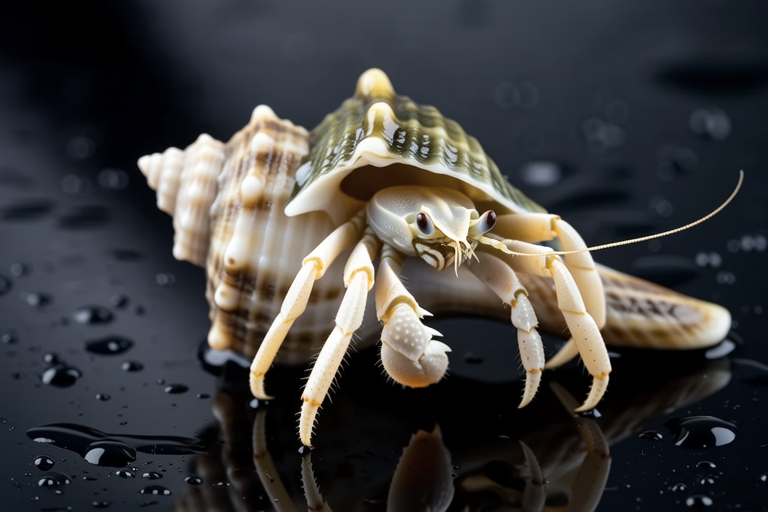
Tiny but Tenacious: How Pea Crabs Survive in Their Hosts
In the vast and intricate web of marine life, few relationships are as fascinating as the symbiotic bond between pea crabs and their hosts. These diminutive crustaceans, barely larger than a thumbnail, have mastered the art of living inside the bodies of mollusks, from bivalves like oysters and clams to sea cucumbers. This article delves into the unique world of pea crabs, exploring their anatomy, life cycle, and the profound impact they have on their hosts and the broader marine ecosystem.
The Symbiotic Relationship
Pea crabs engage in a form of symbiosis known as commensalism, where one organism benefits while the other is neither helped nor harmed. In this case, the pea crabs benefit by finding shelter and food within the protective confines of their host’s mantle cavity, the space between the shell valves. The hosts, typically bivalves, are not significantly affected by the presence of the crabs. However, there are instances where the relationship can tip towards parasitism if the crabs become too numerous, potentially impacting the host’s health.
Anatomy of the Pea Crab
The pea crab’s anatomy is perfectly adapted to its cramped living conditions. Their flattened, oval-shaped bodies allow them to fit snugly within the narrow spaces of their hosts. Unlike most crabs, pea crabs lack a carapace, the hard outer shell that protects many crustaceans. Instead, they have soft, pliable bodies that can adjust to the contours of their host. This flexibility is crucial for their survival, enabling them to move around within the host without causing harm.
Pea crabs also possess long, slender legs that help them navigate through the slimy interior of their hosts. Their claws are relatively small, but they are strong enough to grasp onto the host’s tissues when necessary. This adaptation allows the crabs to maintain their position within the host during periods of movement or stress.
Host Species and Impact
The variety of hosts harboring pea crabs is extensive, ranging from oysters and clams to sea cucumbers and even certain echinoderms. Each host species provides a different environment for the crabs, influencing their behavior and development. For example, bivalves offer a more stable habitat compared to the more mobile sea cucumbers. In bivalves, the pea crabs primarily feed on the host’s gametes, mucus, and other organic matter expelled from the gills. This diet ensures that the crabs receive the nutrients they need without significantly affecting the host’s health.
Interestingly, some studies suggest that the presence of pea crabs may enhance the reproductive success of their hosts. By consuming excess gametes, the crabs may indirectly increase the chances of successful fertilization by reducing competition among sperm. However, this benefit comes at a cost, as the crabs can sometimes consume large quantities of gametes, leading to reduced reproductive output for the host.
Lifecycle and Reproduction
The lifecycle of pea crabs is tightly linked to their hosts, with both juvenile and adult stages occurring within the host’s body. Females lay their eggs within the safety of the host’s mantle cavity, where the developing larvae remain until they are ready to hatch. Once hatched, the tiny larvae swim freely in search of a new host. This period is critical for the crabs, as they must find a suitable host before they grow too large to enter the mantle cavity.
Upon finding a host, the larvae undergo a metamorphosis, transforming into juveniles that are better suited for life within the host. They then spend several months or years growing and maturing within the host’s body. During this time, they continue to feed on the host’s resources, gradually increasing in size until they reach adulthood. Adult pea crabs are capable of reproduction, and the cycle begins anew.
Recent Research and Findings
Recent research has shed light on the complex behaviors and adaptations of pea crabs. One study found that pea crabs exhibit a remarkable ability to sense changes in their host’s environment, allowing them to adjust their feeding habits accordingly. For instance, when the host is under stress, such as during a predator attack, the crabs reduce their feeding activity to minimize the risk of attracting attention. This behavior suggests a level of cognitive sophistication that was previously underestimated.
Another area of interest is the genetic diversity of pea crabs. Researchers have discovered that different populations of pea crabs may have distinct genetic markers, indicating that they have adapted to specific host species over time. This specialization could explain why some pea crab species are found exclusively with certain hosts, while others are more versatile in their choice of hosts.
Ecological Significance
The ecological role of pea crabs extends beyond their direct interactions with their hosts. As part of the marine food web, they serve as a food source for larger predators, contributing to the overall biodiversity of their ecosystems. Additionally, their presence can influence the distribution and abundance of their hosts, potentially shaping the structure of marine communities.
Moreover, pea crabs play a role in nutrient cycling within their ecosystems. By feeding on organic matter within their hosts, they help break down and recycle nutrients, contributing to the overall health of the marine environment. This recycling process supports the growth of other organisms, including algae and plankton, which form the base of many marine food chains.
In conclusion, pea crabs are a testament to the ingenuity of nature. Despite their small size, they have developed a range of adaptations that allow them to thrive in challenging environments. Their unique relationship with their hosts highlights the complexity and interconnectedness of marine ecosystems, reminding us of the delicate balance that exists in the natural world.
