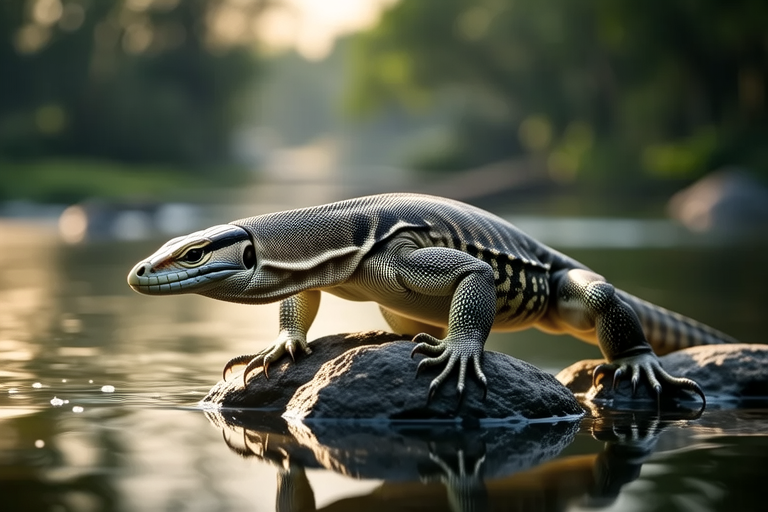
Top 10 Facts About Water Monitors That Will Leave You Amazed
The water monitor (Varanus salvator) is one of the most fascinating reptiles on Earth, known for its impressive size, agility, and adaptability. This species can be found across Southeast Asia, from India to Indonesia, and even in parts of the Philippines. Despite being common in many areas, there’s still much to learn about this remarkable creature. Here are ten facts that will leave you amazed:
Fact 1: The Largest Lizard in the World
Water monitors are the second-largest lizards globally, surpassed only by their close relatives, the Komodo dragons. Adult males can reach lengths of up to 3 meters (9.8 feet) and weigh over 50 kilograms (110 pounds). Females are typically smaller but still formidable. Their robust bodies are covered with rough scales that provide protection against predators and help them maintain body temperature.
Fact 2: Versatile Swimmers
Water monitors are excellent swimmers, capable of diving deep into rivers, lakes, and coastal waters. They use their powerful tails to propel themselves through the water and can stay submerged for extended periods. Their webbed feet also aid in swimming, allowing them to move efficiently in aquatic environments. These reptiles often dive to escape threats or search for food, such as fish, crabs, and amphibians.
Fact 3: Diverse Diet
Water monitors are opportunistic feeders with a varied diet that includes insects, fish, birds, eggs, small mammals, and even carrion. They have sharp teeth and strong jaws, which enable them to crush hard-shelled prey like snails and turtles. Additionally, they possess keen senses of smell and sight, helping them locate food sources both above and below the water’s surface.
Fact 4: Social Behavior
Contrary to popular belief, water monitors exhibit some level of social behavior. They are often seen basking together on logs or rocks, sharing space without aggression. In captivity, these lizards have been observed interacting positively with conspecifics, suggesting that they may form loose social bonds in the wild. However, territorial disputes can occur during mating season or when resources are scarce.
Fact 5: Exceptional Climbing Skills
Water monitors are skilled climbers, thanks to their prehensile tails and sharp claws. They frequently ascend trees to bask in the sun, hunt for prey, or escape danger. Their ability to climb allows them access to food sources that other predators cannot reach, such as bird nests high above the ground. Moreover, climbing helps them regulate their body temperature by moving between shaded and sunny spots.
Fact 6: Adaptability to Urban Environments
In recent years, water monitors have adapted well to urban settings, particularly in cities like Singapore. These adaptable reptiles thrive in human-altered landscapes, where they find abundant food sources and suitable habitats. They often scavenge for scraps in garbage bins and around markets, showcasing their resourcefulness and resilience. Despite living alongside humans, water monitors remain elusive and rarely pose a threat to people.
Fact 7: Mating Rituals
During the breeding season, male water monitors engage in elaborate courtship displays to attract females. These displays involve head bobbing, tail waving, and scent marking. Once a female accepts a male’s advances, they will mate, after which she lays between 10 and 60 eggs in a nest dug into soft soil or sand. Incubation lasts approximately three months before hatchlings emerge.
Fact 8: Longevity
Water monitors can live for more than 20 years in the wild, though captive individuals may exceed this lifespan due to better care and fewer environmental stressors. Their longevity contributes to their ecological role as apex predators in many ecosystems. Over time, these reptiles develop distinctive scars and colorations, making each individual recognizable within its community.
Fact 9: Predators and Prey Relationships
Despite their impressive size and strength, water monitors face several natural predators, including crocodiles, large snakes, and raptors. To defend themselves, they employ various tactics, such as biting, whipping their tails, and releasing foul-smelling secretions from glands near their cloaca. Conversely, water monitors play a crucial role in controlling populations of rodents and other small animals, contributing to ecosystem balance.
Fact 10: Cultural Significance
In many cultures throughout Southeast Asia, water monitors hold symbolic meanings. For instance, in Hindu mythology, Garuda, the divine eagle, is depicted riding on the back of a giant monitor lizard. This association highlights the importance of these creatures in local folklore and traditions. Additionally, water monitors feature prominently in traditional medicine practices across various regions, although scientific evidence supporting their efficacy remains limited.
By exploring these fascinating aspects of water monitors, we gain insight into their complex lives and the critical roles they play within their ecosystems. As conservation efforts continue, it’s essential to recognize the value of preserving these remarkable reptiles and the habitats they call home.
